Insect Farming in the Luangwa Valley
Time Frame: Since June 2024
Partners: University of Wisconsin–Madison
Geographical Range: Chitungulu Chiefdom, Luambe National Park
Project Lead: Geofrey Zulu
Objectives:
- Support local communities by establishing small-scale insect farming initiatives.
- Promote sustainable livestock production by providing insects as affordable, high-protein feed for chickens, fish, as well as a source of organic fertilizer and potential food supplements.
- Empower women by offering training, resources, and income-generating opportunities through insect farming.
A pilot project turning waste into opportunity around Luambe National Park
Communities surrounding Luambe National Park face a constant challenge in balancing livelihoods with environmental protection. Rising feed costs, limited income opportunities and declining soil fertility place increasing pressure on rural households.
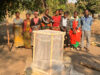
In response, we partnered with the Tizachita Women’s Group in 2024 to launch a pilot Black Soldier Fly farming project. By converting organic waste into valuable agricultural inputs, the project promotes sustainable livelihoods, food security, women empowerment and environmental stewardship. The primary goal of this pilot phase is to test feasibility, build local knowledge and evaluate practical applications under real conditions.
Why Black Soldier Fly (Hermetia illucens) farming
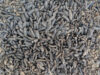
Black Soldier Fly larvae are a natural and efficient recycler of organic waste. While Black Soldier Flies are originally non-native to Zambia, they are now considered a naturalized species that occupies a unique ecological niche as beneficial decomposers without disrupting local biodiversity. Furthermore, they are incapable of becoming a pest because the adults lack functional mouthparts, meaning they cannot bite, feed on crops, or transmit diseases to humans and livestock. Black soldier fly larvae convert kitchen scraps and agricultural byproducts into high quality protein and nutrient rich fertilizer. Through community-based production, this biological process offers several potential benefits:
- Affordable local feed for chickens, fish and other livestock
- Organic fertilizer that improves soil fertility and crop productivity
- New income generating opportunities for rural households
- Protein rich supplements that support human nutrition
- Reduced environmental waste and pressure on natural resources
For communities living near a protected ecosystem, sustainable livelihood options like these are essential for long term conservation.
Community leadership and women’s empowerment
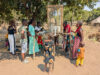
The project is implemented in close partnership with the Tizachita Women’s Group in Chitungulu. From the beginning, the focus has been on knowledge transfer and local ownership. Community members received hands on training in Black Soldier Fly production, waste management and sustainable agriculture.
Early results are encouraging. The group successfully established breeding cycles and proved that Black Soldier Fly larvae can be reproduced reliably under local conditions. This alone is an important milestone, as it demonstrates that insect farming is technically possible in the area.
The pilot phase has already increased community knowledge and skills in insect farming and sustainable waste management. Chickens readily consume the larvae, suggesting strong potential as a low-cost feed source. However, long-term efficiency and measurable benefits still require systematic testing.
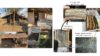
In 2025 the project entered an expansion phase with several improvements. One member of the women’s group and a local intern participated in advanced training at an established insect farm in Lusaka, strengthening local technical expertise. In addition, Nsanga Conservation supported the construction of a dedicated insect farming house. This structure provides more stable temperatures, protects the system from weather extremes and creates space for additional breeding cages.
These developments are designed to strengthen long term sustainability and establish a community led model that could be replicated in other villages across the region.
Learning and research priorities for the next phase
The next stage of the project will focus on practical experiments to better understand how Black Soldier Fly farming can support local agriculture.
We are deeply grateful for the technical guidance and support of the University of Wisconsin–Madison, whose expertise helped shape this initiative. Together, we are working towards a future where innovative, locally adapted solutions strengthen both livelihoods and conservation in the Luangwa Valley.